

Introduction
Dubai’s narrative is one of the most compelling urban stories of the modern era. Its transformation from a small trading post on a desert creek to a global metropolis of superlatives is a masterclass in visionary leadership, strategic geography, and economic audacity. While today it is known for the Burj Khalifa and palm-shaped islands, the true origin of its success lies in a modest saltwater inlet: the Dubai Creek. The Creek was not just a geographical feature; it was the city’s first and most important economic engine.
The Creek: The Original Economic Engine
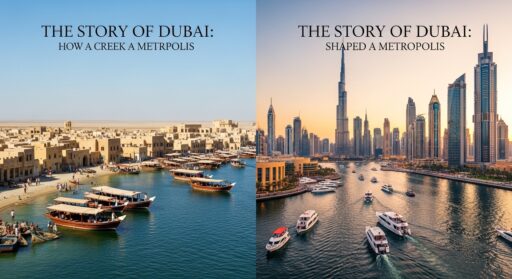
For centuries, the Dubai Creek (Khor Dubai) was the city’s reason for being. Its calm waters provided a natural harbor for the dhows of pearl divers and fishermen. By the early 20th century, it had established itself as the leading port on the Trucial Coast, largely due to the entrepreneurial spirit of its merchants and the laissez-faire policies of its rulers. The Creek was the lifeline that connected Dubai to the wider Indian Ocean world, with goods flowing to and from Iran, India, and East Africa. The settlements of Bur Dubai and Deira grew on its banks, their economies entirely dependent on the maritime trade that flowed through the Creek.
Sheikh Rashid’s Gambit: Dredging for Destiny
By the 1950s, the Creek was silting up, threatening to strangle the trade it had fostered. The late Sheikh Rashid bin Saeed Al Maktoum made a decision that would define Dubai’s future. Lacking the oil wealth of his neighbor Abu Dhabi, he took a massive loan to fund the dredging of the Creek, deepening it to allow larger vessels to access the port. This was a huge risk, but it paid off spectacularly. The expanded Creek solidified Dubai’s position as the premier trading hub in the region, attracting merchants from Lingeh in Iran and setting the stage for the boom to come. It was the first of many infrastructure gambles that would become a Dubai trademark.
From Trade to Tourism: The Pivot to a Global Brand
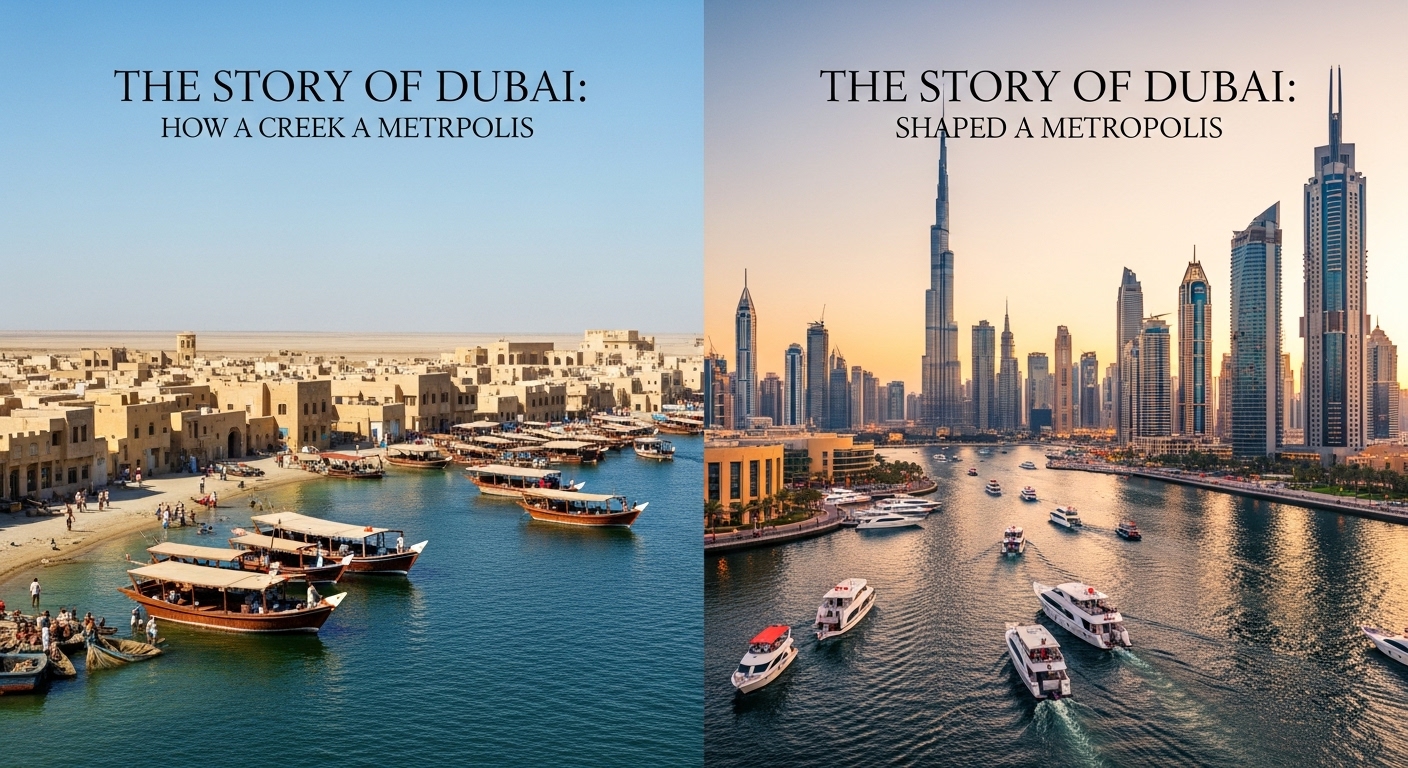
When oil was discovered in 1966, it provided capital, but Dubai’s leaders knew their reserves were limited. Sheikh Rashid and his sons orchestrated a strategic pivot from a trading economy to a diversified global hub. They built the world’s largest man-made port, Jebel Ali, and established a free zone around it. They invested in world-class airports and, most famously, launched an ambitious tourism sector. The construction of iconic landmarks like the Burj Al Arab and the Burj Khalifa was not mere vanity; it was a calculated strategy to put Dubai on the global map and create a brand synonymous with luxury, innovation, and ambition.
The Urban Fabric: A City of Contrasts and Connections
Dubai’s urban landscape is a fascinating tapestry of old and new. The historic Al Fahidi district, with its wind towers and narrow lanes, sits just minutes away from the ultra-modern skyscrapers of Business Bay. The city is a laboratory of architectural experimentation, from the twisting Cayan Tower to the stunning Museum of the Future. This contrast is part of its charm. Yet, the city remains connected by its central artery, the Creek, and its spiritual successor, the Dubai Water Canal, reminding residents and visitors alike of the humble waterway that started it all.
Conclusion: The Unfinished Masterpiece
The story of Dubai is unfinished. It is a city perpetually in beta, always building, always dreaming of the next milestone. Its success is rooted in the mercantile pragmatism born on the decks of the dhows in the Creek and scaled to a global level. From a creek-side souq to a city of the future, Dubai’s journey demonstrates that the most valuable natural resource is not always subterranean, but can be a combination of strategic geography, fearless leadership, and an unwavering belief in the power of ambition to reshape the very skyline.